|
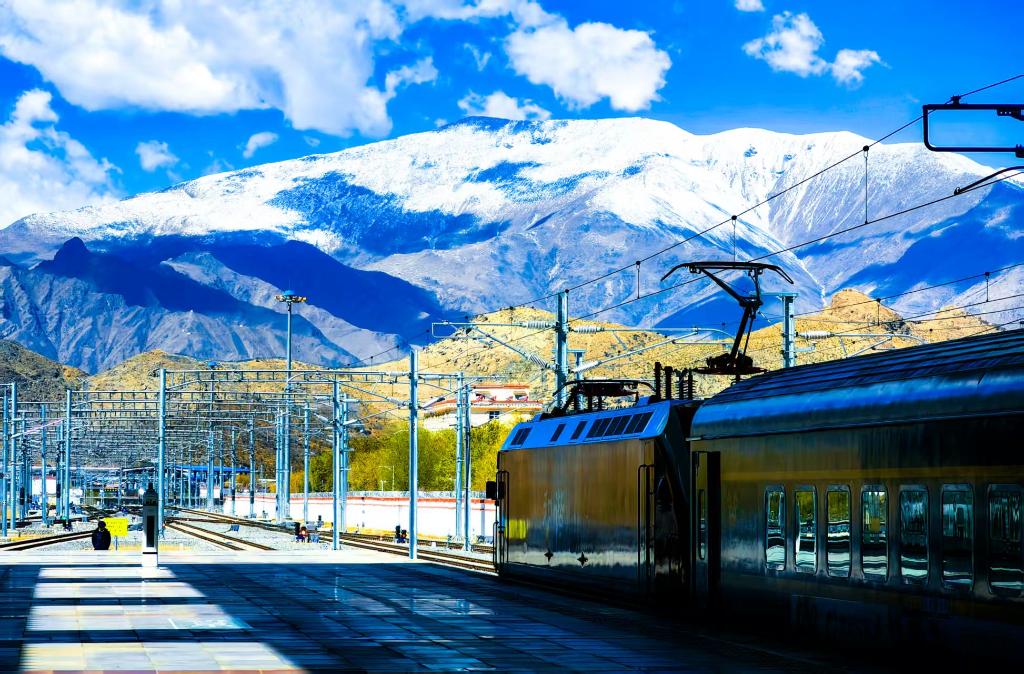
The Qinghai-Tibet Railway offers breathtaking scenery along its route, taking passengers through a variety of landscapes and terrains. Here are some of the most remarkable scenic spots: LakesQinghai Lake - Located about 150 kilometers from Xining, it is China's largest saltwater lake, with an area of 4,500 square kilometers and an altitude of 3,200 meters. The lake is surrounded by vast grasslands and in July and August, when the rape flowers are in full bloom, the contrast between the golden flowers and the blue lake is a sight to behold.Cona Lake - A serene oasis along the railway, Cona Lake is regarded as a "holy lake" by local Tibetans. The railway runs along the lake for dozens of minutes, allowing passengers to enjoy the beautiful scenery of the lake against the backdrop of snow-capped mountains and blue sky.Chaka Salt Lake - Although not directly on the Qinghai-Tibet Railway route, it is a popular side trip. The lake is like a mirror, reflecting the sky and mountains, creating a surreal landscape known as the "Mirror of the Sky."Qarhan Salt Lake - One of the largest inland salt lakes in the world, with an area of 5,848 square kilometers and a salt layer thickness of about 220 meters. The "Ten Thousand Zhang Salt Bridge" built on the lake is a unique sight, where the railway track is made of salt crystals, stretching across the vast salt lake. Mountains and PlateausKunlun Mountains - After leaving Golmud, the train enters the Kunlun Mountains. The majestic Kunlun Mountains with their snow-capped peaks and steep slopes are a spectacular sight. Yuzhu Peak, also known as Kekesaijimen Peak, stands at an altitude of 6,178 meters, and the perpetual snow and glaciers on the peak create a magnificent "June Snow in Kunlun" wonder.Tanggula Mountains - The Tanggula Pass is the highest point on the Qinghai-Tibet Railway, with an altitude of 5,072 meters. It is known as the "Roof of the World." The mountains are covered with snow all year round, and the harsh natural environment makes it a challenging section of the railway. The view from the train window here is of vast snow-capped mountains and desolate plateaus, giving a sense of the grandeur and mystery of nature.Changtang Grassland - This is a typical highland landscape with vast grasslands stretching as far as the eye can see. Herds of yaks and sheep can be seen grazing on the grassland, and the occasional Tibetan tents add a touch of vitality to the scenery. RiversTuotuo River - Known as the "pulse of the plateau," the Tuotuo River is an important tributary and the source of the Yangtze River. The train passes through the Tuotuo River, and passengers can witness the magnificent sight of multiple rivers converging and branching out.Lhasa River - Flowing through Lhasa, the Lhasa River is an important river in Tibet. The river is clear and blue, and the scenery along the river is beautiful, with green grasslands, scattered Tibetan villages, and snow-capped mountains in the distance, presenting a peaceful and beautiful pastoral scene. Cities and TownsXining - The starting point of the Qinghai-Tibet Railway, Xining is the gateway to the Qinghai-Tibet Plateau. It has a unique geographical location and rich cultural heritage, with a blend of ethnic cultures such as Han, Tibetan, and Hui. The city has many historical and cultural sites, as well as delicious local cuisine.Golmud - Located in the Qaidam Basin, Golmud is an important transportation hub and industrial city on the Qinghai-Tibet Railway. It has experienced rapid development in recent years and has a unique urban landscape. Here, you can see the transition from the Gobi Desert to the plateau scenery.Lhasa - The destination of the Qinghai-Tibet Railway, Lhasa is the capital city of Tibet Autonomous Region and a famous historical and cultural city. It is known as the "Sunshine City" with rich cultural and religious heritages. The Potala Palace, Jokhang Temple, and Barkhor Street are all world-renowned tourist attractions, attracting countless tourists from home and abroad. |
|
 |周边二手车|标签|新闻魔笔科技XinWen.MoBi - 海量语音新闻!
( 粤ICP备2024355322号-1|
|周边二手车|标签|新闻魔笔科技XinWen.MoBi - 海量语音新闻!
( 粤ICP备2024355322号-1| 粤公网安备44090202001230号 )